The Algorithmic Dream: How AI is Reimagining Surrealist Art in the Digital Age
The dawn of the twentieth century saw the birth of Surrealism, a movement that sought to bridge the gap between the conscious and the subconscious, the rational and the dreamlike. According to the Tate’s definition, Surrealism aimed to "revolutionise human experience," rejecting a rational vision of life in favor of one that asserted the value of the unconscious and dreams. Today, we find ourselves at a similar crossroads, though the catalyst is not the Freudian psychoanalysis of the 1920s, but the generative algorithms of the 2020s. As artificial intelligence (AI) tools like Midjourney, DALL-E, and Stable Diffusion proliferate, they are birthing a new "Algorithmic Dream," reinterpreting the core tenets of Surrealism through the lens of machine learning and high-dimensional latent space.
The Ghost in the Machine: Hallucinations as Digital Automatism
One of the foundational techniques of historical Surrealism was "psychic automatism." André Breton, in his 1924 Surrealist Manifesto, described it as the dictation of thought in the absence of any control exercised by reason. Artists like Joan Miró and André Masson used automatic drawing to bypass the ego and tap directly into the primal imagery of the mind. In the contemporary digital landscape, AI "hallucinations"—the phenomenon where a model generates unexpected, nonsensical, or anatomically impossible features—serve as a modern mirror to this process.
When a diffusion model generates an image, it begins with a field of static or "noise" and iteratively refines that noise into a coherent image based on a prompt. However, the machine does not "understand" the objects it creates in a biological sense; it understands statistical relationships between pixels. When these relationships break down, the AI produces artifacts: six-fingered hands, architectural structures that fold into themselves, or faces that melt into landscapes. To a traditional programmer, these are errors; to the digital surrealist, they are moments of pure automatism. The AI is not bound by the laws of physics or biology, allowing it to produce imagery that is profoundly irrational yet aesthetically compelling, echoing the Surrealist obsession with the "marvellous" found in the unexpected.
The Prompt Engineer as the Modern-day Medium
Historical Surrealists frequently engaged in collaborative games designed to spark the irrational, most notably the "Exquisite Corpse" (cadavre exquis). In this game, multiple participants would contribute to a drawing or sentence without seeing what the others had produced, resulting in a jarring, non-linear whole. The role of the prompt engineer in the age of AI can be viewed as an evolution of this mediumistic role. The engineer provides the initial spark—the textual seed—but the machine provides the unpredictable execution.
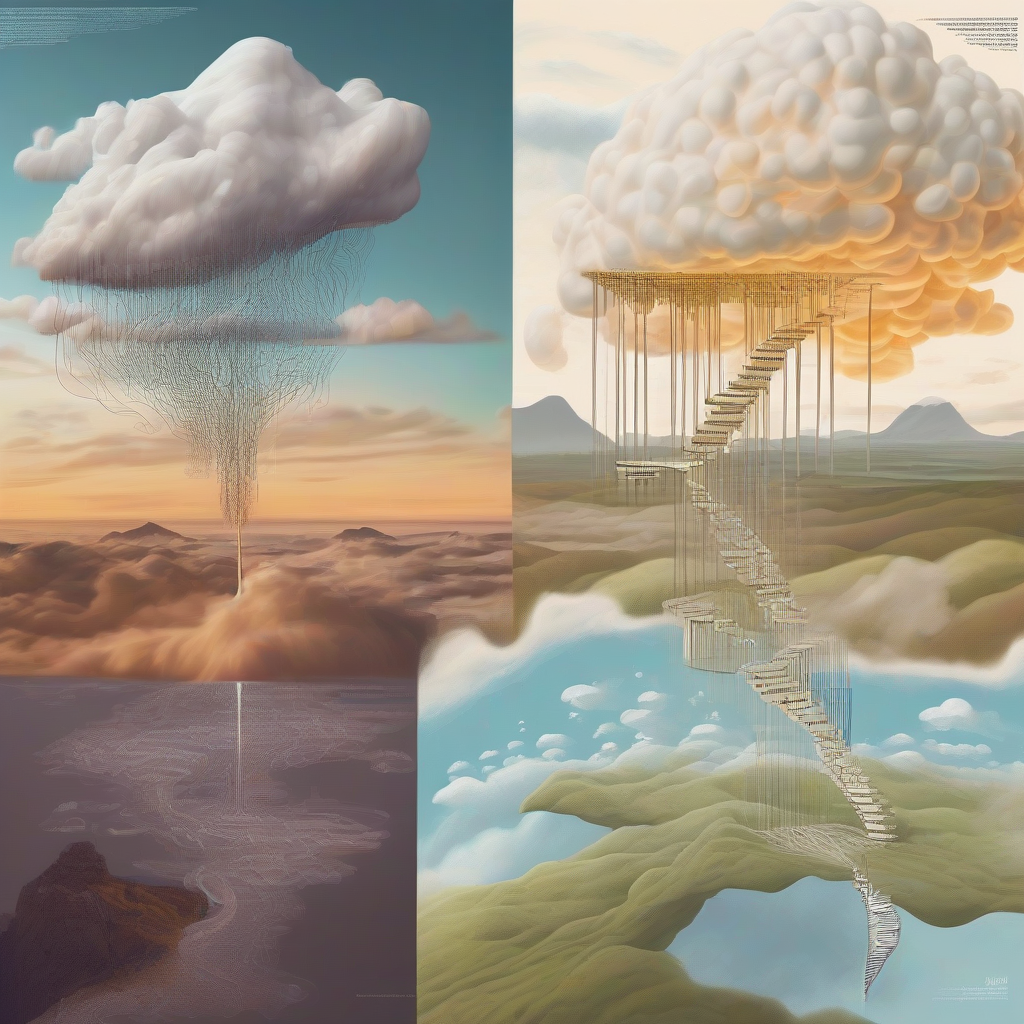
The prompt engineer does not "paint" in the traditional sense; rather, they curate the output of a vast, collective digital subconscious. By inputting contradictory terms—such as "the sound of a melting clock" or "a cathedral made of liquid sunlight"—the user forces the AI to reconcile disparate concepts into a single visual plane. This act of "juxtaposition of two more or less distant realities," a phrase famously used by the poet Pierre Reverdy and championed by the Surrealists, is the primary function of the prompt. The resulting image is a collaboration between human intent and algorithmic chance, much like the chance encounters celebrated by Salvador Dalí and Max Ernst.
Digital Heirs: Evoking the Masters of the Uncanny
The visual language of generative AI often bears a striking resemblance to the works of the Surrealist masters, not merely because of stylistic mimicry, but because the underlying logic of the software favors the dreamlike. We see this across several key figures:
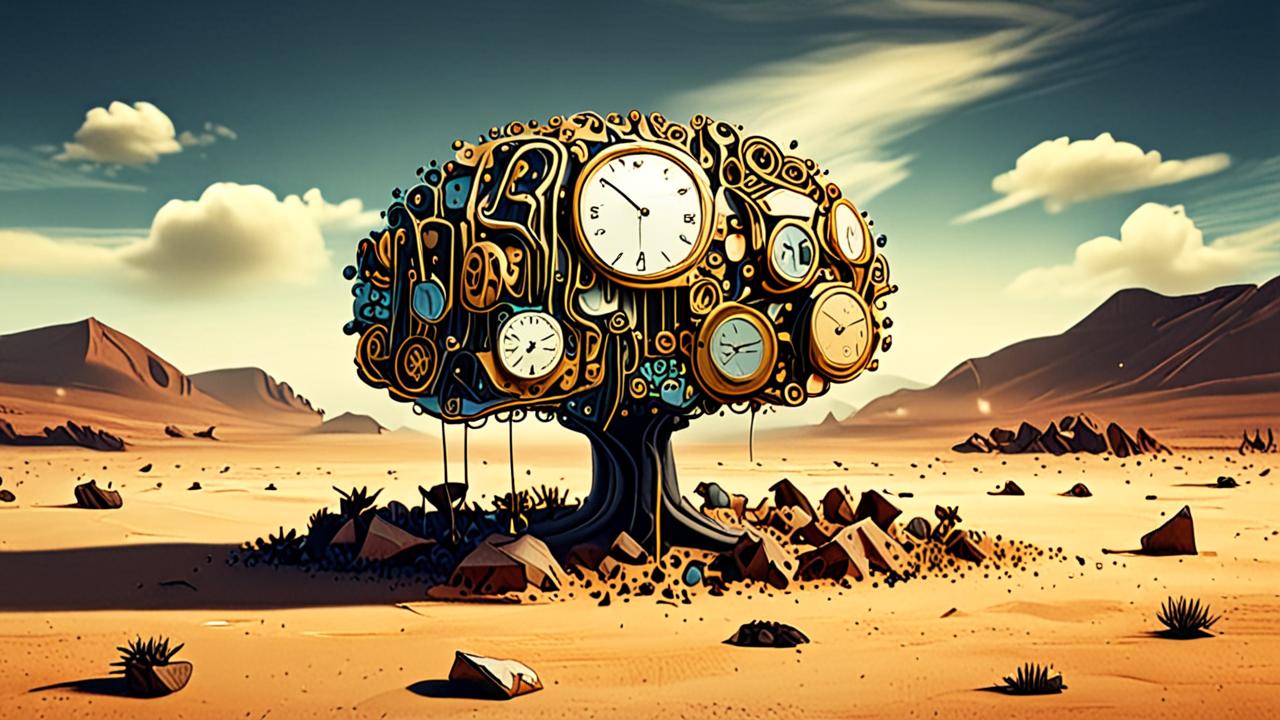
- Salvador Dalí and the Fluidity of Time: Dalí’s "The Persistence of Memory" (1931) introduced the world to the "paranoiac-critical method," where objects lose their rigidity and take on new, impossible forms. AI tools excel at this liquefaction of reality. When prompting Midjourney for hyper-realistic landscapes, the model often introduces "glitches" where mountains flow like water or trees grow into the sky, mimicking Dalí’s obsession with the transformation of matter.
- René Magritte and Semantic Subversion: Magritte’s work, such as "The Treachery of Images" (1929), challenged the relationship between words and objects. AI art frequently encounters a similar "semantic gap." When an AI attempts to render a complex philosophical prompt, it often creates visual puns and literalized metaphors that Magritte would have recognized. The "uncanny valley" effect in AI—where something looks almost human but feels fundamentally "off"—mirrors the quiet, unsettling stillness of Magritte’s bowler-hatted men.
- Max Ernst and the Layering of Reality: Ernst utilized techniques like frottage (rubbing) and grattage (scraping) to reveal hidden textures and forms. Stable Diffusion, through its ability to "img2img" (transforming one image into another) or "inpaint" (replacing parts of an image), allows for a digital version of this layering. Artists can take a mundane photograph and "scrape" away its reality, replacing it with alien textures, much like Ernst’s "The Robing of the Bride" (1940), where human forms are subsumed by bird-like plumage and architectural anomalies.
The Ontological Debate: Mimicry vs. Subconscious Creation
A central question remains for art historians and researchers: Can AI truly create irrational, subconscious imagery, or is it merely a sophisticated mimic of human output? To answer this, we must look at the source of the AI’s "knowledge." Generative models are trained on billions of images—the sum total of human visual culture available on the internet. In this sense, the AI is not tapping into its own subconscious, but into a "Collective Digital Subconscious."
When the AI produces a surreal image, it is synthesizing thousands of years of human dreams, fears, and artistic expressions. It is a statistical mirror of the human psyche. However, the AI lacks the "intentional irrationality" that defined the Surrealists. Breton and his peers were making a political and social statement; they used the irrational as a weapon against the "logic" that had led to the horrors of World War I. The AI, conversely, is indifferent. It produces the irrational because it is programmed to navigate a space where logic is not a requirement, only statistical probability.
Yet, from a viewer's perspective, the distinction may be moot. If a machine-generated image of a "transparent elephant walking through a forest of glass" evokes the same sense of wonder and cognitive dissonance as a painting by Dorothea Tanning, then the AI has successfully fulfilled the Surrealist mission of expanding the boundaries of the possible. The irrationality is "emergent" rather than "intentional," but its impact on the human viewer remains profound. We are seeing a shift from the artist as a creator of dreams to the artist as a navigator of an infinite, pre-existing dream-space.
Conclusion: The New Surrealist Manifesto
The intersection of AI and Surrealism represents a new frontier in digital aesthetics. By automating the process of juxtaposition and embracing the "hallucinatory" nature of neural networks, we are entering an era where the dream world is no longer confined to the canvas or the inner mind. It is now a collaborative space, accessible through the keyboard and the algorithm. While AI may lack a biological subconscious, its ability to reassemble the fragments of our collective culture into strange, new configurations makes it the ultimate Surrealist tool. The "Algorithmic Dream" is not a replacement for human creativity, but a powerful expansion of it—a way to see the world not as it is, but as it could be in the deepest, most irrational corners of our shared imagination.